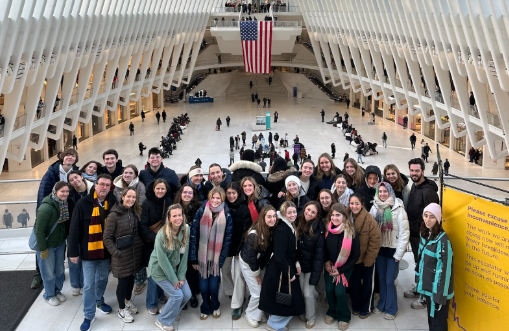
Loyola’s Architecture club gives students a space to design freely, without the pressure of grades or formal coursework.
The club meets after school once a week to discuss architecture in a relaxed and collaborative setting. Students of all experience levels are welcome to attend, whether they are enrolled in architecture class or simply interested in the profession.
“For someone who’s never heard of the architecture club, it’s a fun meeting to discuss architecture just for fun, with no worries of work to do,” said club president Henrik Djuvik.
Unlike the structured environment of a classroom that has many deadlines and requirements, meetings focus on discussion. Members analyze different buildings and discuss design choices on the projects they are doing themselves. The club allows for students to explore their creativity and collect constructive feedback from their peers.
“Architecture class can be very hard for some people, and it turns them away from the subject,” Djuvik said. “So the club allows for them to have fun with architecture and learn more about the subject from a viewers perspective, rather than an architect’s perspective.”
Mr. Shearon, Loyola’s architecture teacher, oversees the club and helps guide discussion while allowing students to take control of the meetings. He described architecture club as “a one hour immersive experience in designing built environments for bespoke purposes.”
The relaxed tone shapes the atmosphere of each meeting. Students occasionally sit in small groups and build off one another’s ideas. Some focus on visual aesthetics while others consider structure or function.
“Architecture isn’t just creativity. There is a lot more that goes into it,” Djuvik said. “And since we have it structured into groups, anyone can bring their unique skills together and create something great.”
Beyond the creative exploration, the club also develops practical skills. “Club members learn how to identify, analyze, and evaluate best in-practice architecture design,” Mr. Shearon said.
Meetings often include interactive projects that make design accessible to everyone. According to Mr. Shearon, the club hosts “pumpkin carving and gingerbread house design competitions welcome to anyone in the school.” These events allow students to apply design thinking in fun and creative ways.
Teamwork plays a major role in the club’s structure. “There is a collaborative component of discourse for members in each meeting, and architecture club officers work as a team who organize the projects, snacks, and attendance for the betterment of the club members,” Mr. Shearon said.
The club also emphasizes respectful discussion. “They learn how to civilly discuss differences and constructively criticize designs,” Mr. Shearon said.
For students who may feel intimidated by the demands of architecture class, the club provides a more casual entry point. Shearon described it as “a fun, safe, and social environment for students to explore their creativity.”
By combining creativity, collaboration and constructive critique, Architecture Club offers Loyola students a welcoming space to experience design while building meaningful skills that extend beyond the classroom.